
SON DAKİKA — Canlı yayın akışı devam ediyor
14:42 · İSTANBUL
How to achieve hydroponic optimization for compact high-value fruit varieties?
Imagine consistently producing 15 kilograms of strawberries with a sugar content of up to 12% annually within a mere 0.5 square meters of vertical space, achieving an annual output value exceeding 5,000 RMB per square meter. This is precisely the astonishing potential of refined hydroponic optimization for compact high-value fruit varieties. Achieving this goal hinges on millimeter-level control of environmental parameters such as light, temperature, water, air, and fertilizer. For example, configuring a full-spectrum LED light source with a photoluminescence flux density (PPFD) of 300 μmol/m²/s for compact strawberry varieties like "Albi," with precise control of daily light exposure to 16 hours, can increase fruit yield by 35% while shortening the growth cycle from the traditional 120 days to 95 days.
Nutrient solution management is the central nervous system of optimization. For high-value compact fruits like "Millennium" cherry tomatoes, dynamically adjusted nutrient solution formulations are crucial. Studies have found that increasing the electrical conductivity (EC value) of the nutrient solution from 1.8 mS/cm in the seedling stage to 2.5 mS/cm during the flowering and fruit-setting period, and precisely controlling the potassium-calcium ratio at 2:1, can increase the number of fruits per plant by 22% and the vitamin C content of the fruit by 18%. Using a closed-loop circulation system can save up to 90% of water and increase fertilizer utilization from approximately 40% in soil cultivation to over 95%. Many high-tech greenhouses in the Netherlands have achieved an industry benchmark of over 70 kg of tomatoes per square meter annually through this precise fertigation system.
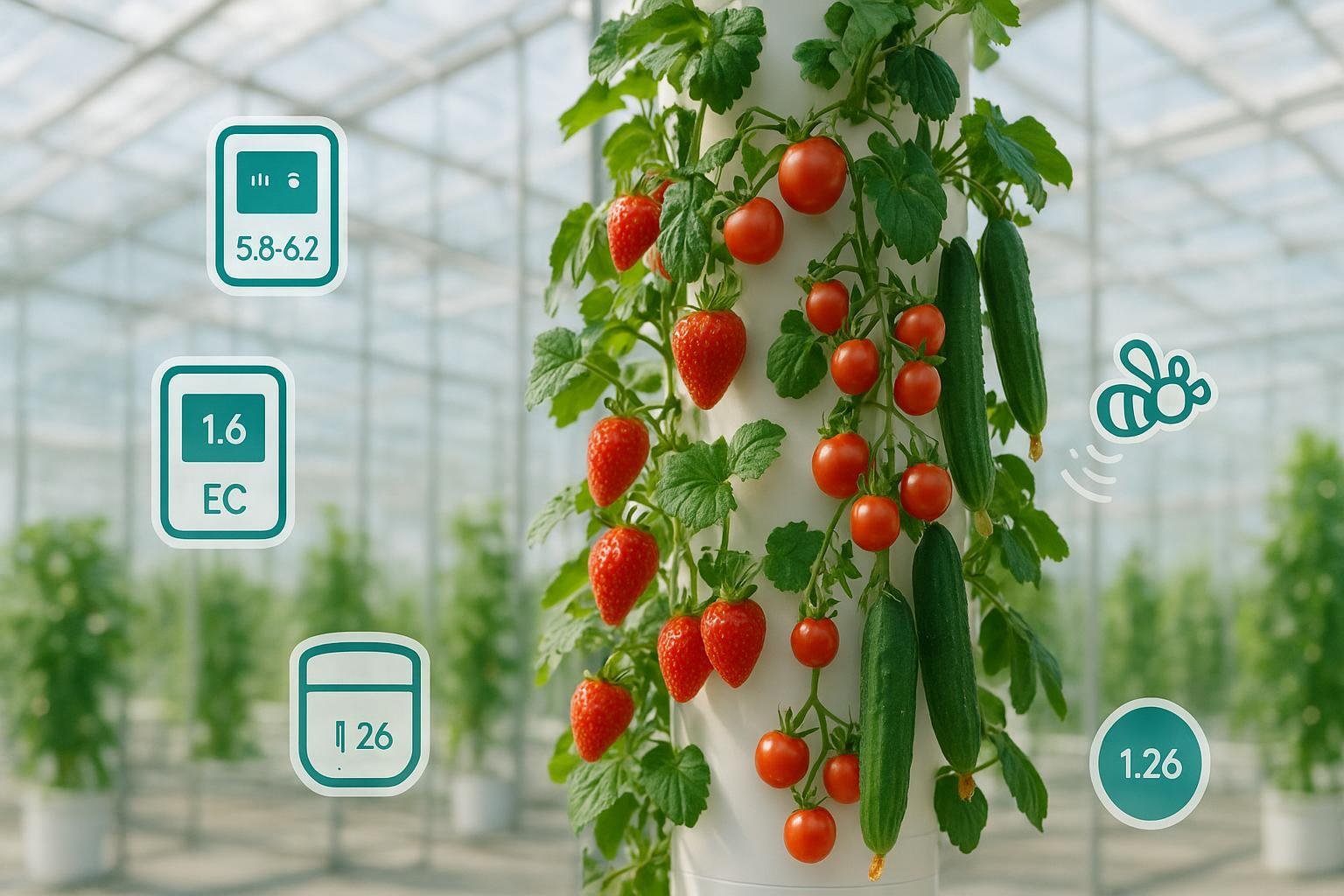 The precision of environmental control directly affects quality and yield. Maintaining stable daytime temperatures at 23-25°C and lowering nighttime temperatures to 18°C significantly promotes sugar accumulation. For high-value acid-loving shrub fruit trees such as blueberries, strictly maintaining the pH of the nutrient solution within a narrow range of 4.8-5.5 can increase the absorption efficiency of micronutrients such as iron and manganese by 30%, effectively preventing nutrient deficiencies. Meanwhile, maintaining root dissolved oxygen concentration above 8 mg/L accelerates metabolism and increases plant growth rate by 25%. For example, the indoor farm project at Foxconn in Shenzhen successfully mass-produced high-quality golden berries in an urban environment using this hydroponic optimization strategy for compact high-value fruit varieties, achieving a profit margin approximately 40% higher than traditional cultivation.
Variety selection and system adaptation are the starting point for success. For instance, the indeterminate "Busan 88" strawberry variety, cultivated on elevated coconut coir substrate with a drip irrigation system, can achieve a continuous harvest period of up to 8 months, with an annual cumulative yield of 10-15 kg per square meter. Meanwhile, dwarf, densely planted passion fruit varieties, in a vertical column hydroponic system with a single column capacity of 12 plants, can produce up to 30 kg of fruit annually, achieving a space utilization rate five times that of traditional cultivation. The domestic startup "Polaris Agriculture" increased planting density per unit area by 200% and improved manual management efficiency by 50% by introducing such compact varieties and optimizing a deep-sea submersible hydroponic system.
Ultimately, economic benefits are the ultimate indicator of the effectiveness of optimization. A compact hydroponic fruit cultivation workshop with an investment of approximately 500,000 yuan and an area of 200 square meters, through precise environmental control and planting strategies, is expected to generate annual revenue exceeding 1 million yuan. Of the operating costs, electricity accounts for approximately 30%, nutrient solution for approximately 15%, and high-quality seedlings for approximately 10%. Through a three-dimensional layout, the effective planting layers can reach 5-7 layers, compressing the overall investment payback period to 2-3 years. Market data shows that through systematic hydroponic optimization for compact high-value fruit varieties, the premium for these fruits can typically reach 2-3 times the ordinary market price, and due to their pesticide-free and traceable characteristics, the repurchase rate in high-end supermarkets and e-commerce platforms exceeds 60%. This is not merely an iteration of agricultural technology, but a precise revolution concerning space, resources, and flavor returns.
The precision of environmental control directly affects quality and yield. Maintaining stable daytime temperatures at 23-25°C and lowering nighttime temperatures to 18°C significantly promotes sugar accumulation. For high-value acid-loving shrub fruit trees such as blueberries, strictly maintaining the pH of the nutrient solution within a narrow range of 4.8-5.5 can increase the absorption efficiency of micronutrients such as iron and manganese by 30%, effectively preventing nutrient deficiencies. Meanwhile, maintaining root dissolved oxygen concentration above 8 mg/L accelerates metabolism and increases plant growth rate by 25%. For example, the indoor farm project at Foxconn in Shenzhen successfully mass-produced high-quality golden berries in an urban environment using this hydroponic optimization strategy for compact high-value fruit varieties, achieving a profit margin approximately 40% higher than traditional cultivation.
Variety selection and system adaptation are the starting point for success. For instance, the indeterminate "Busan 88" strawberry variety, cultivated on elevated coconut coir substrate with a drip irrigation system, can achieve a continuous harvest period of up to 8 months, with an annual cumulative yield of 10-15 kg per square meter. Meanwhile, dwarf, densely planted passion fruit varieties, in a vertical column hydroponic system with a single column capacity of 12 plants, can produce up to 30 kg of fruit annually, achieving a space utilization rate five times that of traditional cultivation. The domestic startup "Polaris Agriculture" increased planting density per unit area by 200% and improved manual management efficiency by 50% by introducing such compact varieties and optimizing a deep-sea submersible hydroponic system.
Ultimately, economic benefits are the ultimate indicator of the effectiveness of optimization. A compact hydroponic fruit cultivation workshop with an investment of approximately 500,000 yuan and an area of 200 square meters, through precise environmental control and planting strategies, is expected to generate annual revenue exceeding 1 million yuan. Of the operating costs, electricity accounts for approximately 30%, nutrient solution for approximately 15%, and high-quality seedlings for approximately 10%. Through a three-dimensional layout, the effective planting layers can reach 5-7 layers, compressing the overall investment payback period to 2-3 years. Market data shows that through systematic hydroponic optimization for compact high-value fruit varieties, the premium for these fruits can typically reach 2-3 times the ordinary market price, and due to their pesticide-free and traceable characteristics, the repurchase rate in high-end supermarkets and e-commerce platforms exceeds 60%. This is not merely an iteration of agricultural technology, but a precise revolution concerning space, resources, and flavor returns.
The precision of environmental control directly affects quality and yield. Maintaining stable daytime temperatures at 23-25°C and lowering nighttime temperatures to 18°C significantly promotes sugar accumulation. For high-value acid-loving shrub fruit trees such as blueberries, strictly maintaining the pH of the nutrient solution within a narrow range of 4.8-5.5 can increase the absorption efficiency of micronutrients such as iron and manganese by 30%, effectively preventing nutrient deficiencies. Meanwhile, maintaining root dissolved oxygen concentration above 8 mg/L accelerates metabolism and increases plant growth rate by 25%. For example, the indoor farm project at Foxconn in Shenzhen successfully mass-produced high-quality golden berries in an urban environment using this hydroponic optimization strategy for compact high-value fruit varieties, achieving a profit margin approximately 40% higher than traditional cultivation.
Variety selection and system adaptation are the starting point for success. For instance, the indeterminate "Busan 88" strawberry variety, cultivated on elevated coconut coir substrate with a drip irrigation system, can achieve a continuous harvest period of up to 8 months, with an annual cumulative yield of 10-15 kg per square meter. Meanwhile, dwarf, densely planted passion fruit varieties, in a vertical column hydroponic system with a single column capacity of 12 plants, can produce up to 30 kg of fruit annually, achieving a space utilization rate five times that of traditional cultivation. The domestic startup "Polaris Agriculture" increased planting density per unit area by 200% and improved manual management efficiency by 50% by introducing such compact varieties and optimizing a deep-sea submersible hydroponic system.
Ultimately, economic benefits are the ultimate indicator of the effectiveness of optimization. A compact hydroponic fruit cultivation workshop with an investment of approximately 500,000 yuan and an area of 200 square meters, through precise environmental control and planting strategies, is expected to generate annual revenue exceeding 1 million yuan. Of the operating costs, electricity accounts for approximately 30%, nutrient solution for approximately 15%, and high-quality seedlings for approximately 10%. Through a three-dimensional layout, the effective planting layers can reach 5-7 layers, compressing the overall investment payback period to 2-3 years. Market data shows that through systematic hydroponic optimization for compact high-value fruit varieties, the premium for these fruits can typically reach 2-3 times the ordinary market price, and due to their pesticide-free and traceable characteristics, the repurchase rate in high-end supermarkets and e-commerce platforms exceeds 60%. This is not merely an iteration of agricultural technology, but a precise revolution concerning space, resources, and flavor returns.
Son dakika gelişmeleri cebine gelsin →
Son Dakika Bildirimlerini Aç